
How Deep Should You Plant a New Tree in North Texas Clay Soil?
When planting a new tree in North Texas clay soil, position the root flare, where the trunk widens into the main roots, at or slightly above the surrounding ground level. Dig the planting hole no deeper than the root ball and approximately two to three times as wide. Proper planting depth helps prevent root suffocation, moisture problems, and long-term tree stress.
Planting a tree is one of the best ways to improve your property’s appearance, create shade, and enhance your outdoor environment. However, North Texas homeowners face a particular challenge: heavy clay soil. Unlike sandy soil, clay holds moisture longer, drains slowly, and can become compacted, making proper tree installation especially important.
At TNT Yardscapes, we understand that successful landscaping starts below the surface. Whether you’re adding shade trees, updating your front yard, or planning a complete landscape transformation, thoughtful planting techniques help establish a healthier landscape. Our approach emphasizes practical solutions that complement your property and the growing conditions found throughout North Texas.
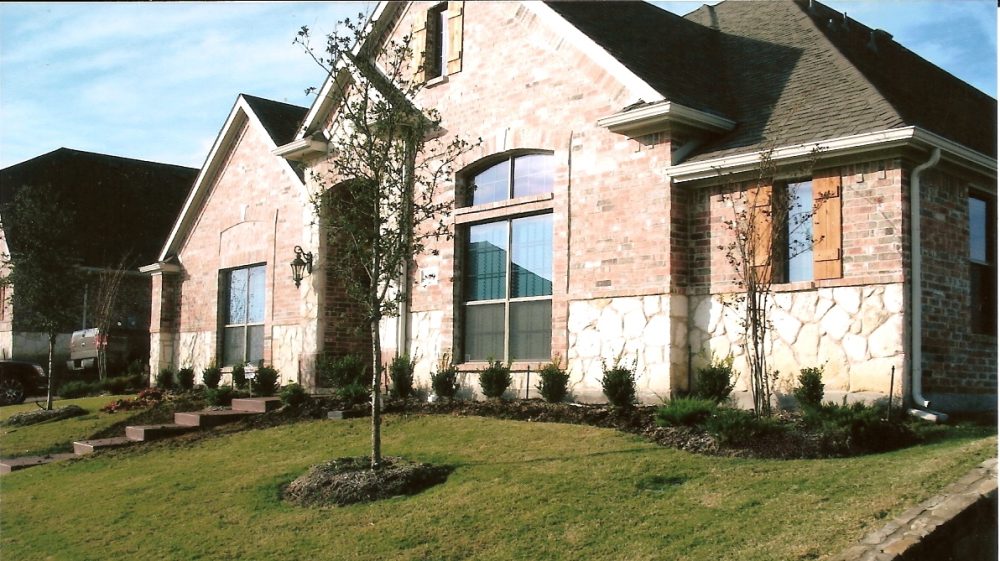
Proper Tree Planting Depth in North Texas Clay Soil
Planting depth directly affects how well a tree establishes its roots, absorbs oxygen, and manages moisture. In clay-heavy landscapes, even a few extra inches of soil covering the root flare can contribute to long-term problems.
Understanding the correct planting process helps homeowners avoid costly mistakes and gives new trees a better opportunity to thrive.
1. Why Is Planting Depth So Important in Clay Soil?
Planting a tree too deeply can restrict oxygen movement around the roots and trap moisture against the trunk.
North Texas clay soil contains fine particles that hold water tightly. Although clay can retain valuable nutrients, its slow drainage can create challenges for newly planted trees.
When the root flare is buried, the tree may experience:
- Reduced oxygen availability around important roots
- Excess moisture against the lower trunk
- Increased risk of root and trunk decay
- Slower establishment and reduced growth
- Greater susceptibility to stress during extreme weather
A tree planted too deeply may initially appear healthy, but problems can develop gradually.
The goal is to position the tree so its root system has access to oxygen, moisture, and surrounding soil without burying the trunk.
2. How Wide and Deep Should You Dig the Planting Hole?
For most container-grown or balled-and-burlapped trees, the planting hole should be approximately two to three times wider than the root ball, but no deeper than the distance from the root flare to the bottom of the root ball.
This wide, shallow planting hole encourages roots to expand horizontally into the surrounding soil.
Follow these general guidelines:
- Locate the root flare. Gently remove excess soil from the top of the root ball until you find where the trunk transitions into the main structural roots.
- Measure the root ball. Measure from the exposed root flare to the bottom of the root ball to determine the appropriate hole depth.
- Dig a wide hole. Make the hole two to three times the width of the root ball to provide room for root expansion.
- Keep the bottom firm. Avoid loosening the soil directly beneath the root ball, which could cause the tree to settle too deeply.
- Check the final height. Position the root flare at or slightly above the surrounding soil grade.
According to Texas A&M AgriLife Extension, correct planting depth and proper root flare placement are essential considerations when establishing landscape trees.
For North Texas homeowners, these details are particularly important because clay soil can remain saturated after heavy rainfall.
3. Should You Add Compost or Sand to North Texas Clay Soil Before Planting?
In most cases, backfilling a tree planting hole primarily with the original native soil is preferable to filling it with a heavily amended soil mixture.
Adding large amounts of compost, sand, or commercial planting soil to an individual hole can create an abrupt difference between the planting area and the surrounding clay.
This may affect how water moves through the soil and how roots expand beyond the original planting hole.
Instead, consider these practices:
- Break apart large clumps of excavated soil without pulverizing wet clay.
- Use the original soil to backfill around the root ball.
- Avoid packing the soil so tightly that air spaces disappear.
- Apply organic mulch across the surrounding soil surface.
- Address major drainage problems before planting.
Adding a small amount of organic matter across a broader landscape area may improve soil conditions over time, but it is not a substitute for proper drainage or planting depth.
The University of Florida IFAS Extension also emphasizes the importance of wide planting holes and appropriate root ball placement for successful tree establishment.
4. How Can You Prevent Water From Collecting Around Newly Planted Trees?
The most effective way to reduce water-related problems is to evaluate drainage before installation and avoid creating a planting hole that holds standing water.
Heavy North Texas clay can drain slowly, particularly after extended rainfall.
If water collects in a planting hole and remains there for long periods, the tree’s roots may experience low-oxygen conditions.
Before planting, homeowners should evaluate:
- Whether the planting location remains wet after rainfall
- Whether nearby downspouts direct water toward the tree
- Whether the surrounding yard slopes toward the planting area
- Whether the soil has been compacted by construction or foot traffic
- Whether the selected tree species tolerates the site’s moisture conditions
For locations with consistently poor drainage, planting slightly higher, using an appropriately designed raised planting area, or correcting drainage issues may be necessary.
Avoid simply adding gravel to the bottom of the planting hole. Gravel does not reliably solve poor drainage and can reduce the space available for roots.
A professional landscape evaluation can help determine whether the site is suitable for the intended tree.
5. What Should You Do After Planting a Tree in Clay Soil?
New trees need consistent moisture, appropriate mulch, and regular observation while their roots establish.
Clay soil often stays wet longer than sandy soil, so watering frequency should depend on actual soil moisture rather than a fixed daily schedule.
For better results:
Water deeply but monitor moisture. Check the soil near the root ball before watering again. The soil should be moist without remaining saturated.
Apply mulch correctly. Spread approximately two to three inches of organic mulch around the tree, keeping it several inches away from the trunk.
Avoid unnecessary fertilization. Newly planted trees generally do not need immediate fertilizer unless soil testing or specific conditions indicate a deficiency.
Monitor settling. Check whether the root flare remains visible after watering and rainfall.
Inspect for stress. Watch for persistent wilting, yellowing leaves, unusual leaf drop, or prolonged soggy conditions.
Remember that newly planted trees need time to establish. The first growing season is especially important for developing a healthy root system.
Frequently Asked Questions About Planting Trees in North Texas
Can you plant a tree too high in clay soil?
Yes. Planting too high can expose important roots and cause them to dry out. The root flare should remain visible, but the root system must be adequately covered with soil.
Is fall a good time to plant trees in North Texas?
Yes. Fall is often an excellent time to plant many tree species in North Texas because cooler temperatures reduce heat stress while roots can continue developing when soil conditions are favorable.
Should you water a newly planted tree every day?
Not necessarily. Watering needs depend on tree size, weather, soil moisture, and drainage. Newly planted trees may require frequent watering initially, but clay soil should be checked carefully to avoid overwatering.
What happens if a tree is planted too deeply?
A deeply planted tree may experience reduced root oxygen, trunk decay, poor growth, and long-term health problems. Correcting planting depth early is generally easier than addressing problems after the tree becomes established.
Ready to Plant New Trees the Right Way? Contact TNT Yardscapes!
A beautiful landscape begins with proper planning, healthy soil conditions, and professional installation.
At TNT Yardscapes, we help homeowners create attractive, functional outdoor spaces with landscaping solutions designed around their property’s needs.
Whether you’re adding new trees, refreshing existing landscape beds, or planning a larger landscape improvement, our team is ready to help.
Contact TNT Yardscapes today to discuss your next landscaping project and give your new trees a strong start!