
How Does Proper Drainage Protect Your Landscaping Investment?
Proper landscape drainage protects your landscaping investment by preventing soil erosion, standing water, root damage, and moisture-related damage to outdoor features. Effective drainage improvements direct excess water away from vulnerable areas, helping lawns, plants, patios, and landscape beds remain healthy. Addressing drainage problems early can reduce costly repairs and extend the life of your landscape.
At TNT Yardscapes, we understand that a beautiful landscape is an investment worth protecting. From healthy lawns and vibrant planting beds to carefully designed outdoor living spaces, every element of your property deserves proper care. Unfortunately, poor drainage can quickly undermine even the most attractive landscape.
Our team believes that successful landscaping goes beyond appearance. It requires thoughtful planning, practical solutions, and attention to the conditions that affect your property’s long-term health. We focus on helping homeowners create outdoor spaces that are both beautiful and functional. By identifying drainage concerns and recommending improvements suited to each property’s needs, TNT Yardscapes helps homeowners protect their landscapes while enjoying greater peace of mind.
Why Effective Landscape Drainage Is Essential for Long-Term Property Protection
Water is necessary for a thriving landscape, but too much water in the wrong place can create serious problems. Proper drainage helps maintain balanced soil moisture, supports healthy plant growth, and protects landscape structures.
Understanding how drainage affects your property is the first step toward preventing avoidable damage.
1. How Does Poor Drainage Damage Your Lawn and Plants?
Poor drainage can damage lawns and plants by keeping their roots in waterlogged soil for extended periods. When soil remains saturated, oxygen becomes less available to plant roots, weakening growth and increasing the risk of root disease.
Common warning signs include:
- Yellowing grass despite regular watering
- Puddles that remain long after rainfall
- Plants that wilt even when the soil is wet
- Bare patches or thinning turf
- Persistent muddy areas around landscape beds
According to the University of Minnesota Extension, poorly drained soils can limit oxygen availability to roots and negatively affect plant health.
Professional drainage improvements can help restore healthier growing conditions by moving excess water away from areas where it accumulates.
Helpful tip: Check your lawn and planting beds after heavy rainfall. Areas that remain saturated noticeably longer than surrounding soil may need drainage attention.
2. Can Drainage Improvements Prevent Soil Erosion?
Yes. Drainage improvements can reduce soil erosion by controlling the direction and speed of water flowing across your property.
When rainwater moves rapidly over exposed soil, it can carry away valuable topsoil, mulch, and nutrients. Over time, erosion may expose plant roots, create uneven ground, and damage carefully designed landscape beds.
The U.S. Environmental Protection Agency (EPA) identifies stormwater runoff as a contributor to erosion and the movement of sediment into waterways.
Effective erosion-control strategies may include:
- French drains: Redirect subsurface water away from problem areas.
- Catch basins: Collect surface runoff and direct it into drainage piping.
- Grading adjustments: Encourage water to move away from vulnerable areas.
- Swales: Guide runoff through shallow, landscaped channels.
- Groundcover plants: Help stabilize exposed soil.
The right solution depends on your property’s slope, soil conditions, and the source of excess water.
Helpful tip: Watch for exposed roots, washed-away mulch, and small channels forming in the soil. These are early indicators that runoff may be affecting your landscape.
3. How Can Better Drainage Protect Patios, Walkways, and Hardscaping?
Proper drainage helps protect patios, walkways, retaining walls, and other hardscape features by reducing unwanted water accumulation and soil movement.
When water repeatedly collects around paved surfaces, it can weaken supporting soil and contribute to settling or uneven surfaces. In colder climates, trapped moisture may also increase the risk of freeze-thaw damage.
Drainage planning is especially important when installing:
- Paver patios and outdoor seating areas
- Walkways and garden paths
- Retaining walls
- Outdoor kitchens and entertainment spaces
- Decorative stone features
Water should be directed toward an appropriate drainage outlet rather than allowed to collect beneath or beside these structures.
At TNT Yardscapes, we believe drainage should be considered as part of the overall landscape design, not simply after problems develop.
4. What Drainage Improvements Are Best for Residential Landscapes?
The best residential drainage improvement depends on where the water originates, how it travels across the property, and where it can safely be discharged.
Different drainage problems require different solutions.
French Drains
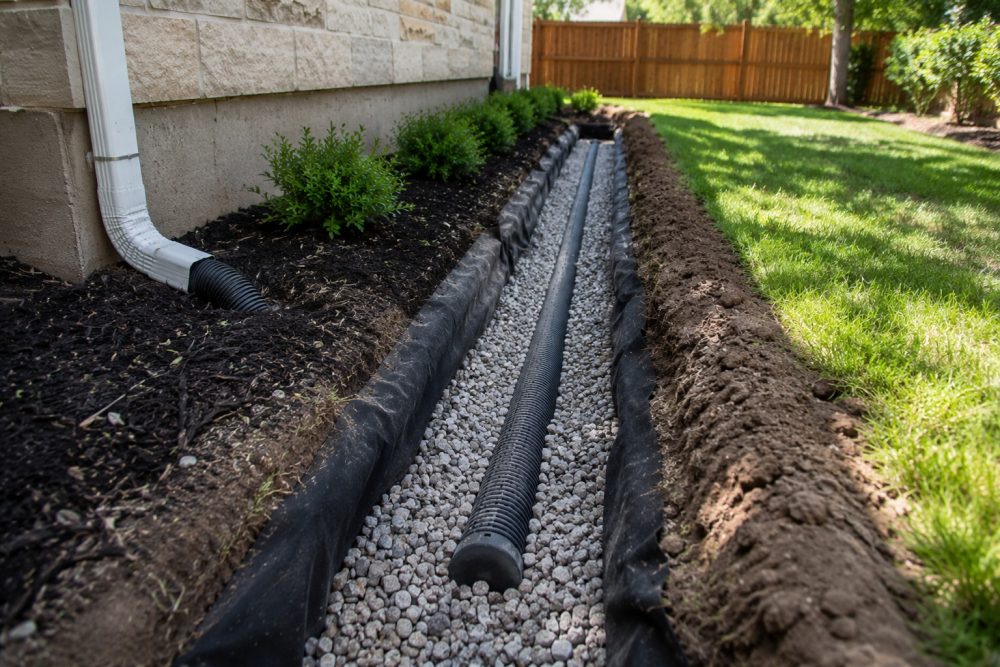
French drains use perforated piping surrounded by drainage material to collect and redirect water moving through saturated soil. They can be useful in persistently wet areas where subsurface drainage is needed.
Catch Basins and Drainage Pipes
Catch basins collect surface water from low spots and direct it through underground piping. These systems are often useful where runoff collects after storms.
Landscape Grading
Grading adjusts the slope of the ground to encourage water to flow away from structures and planting areas. Proper grading is one of the most important elements of an effective drainage strategy.
Rain Gardens
Rain gardens use specially designed planting areas to temporarily collect and absorb runoff. When soil and site conditions are suitable, they can provide both drainage benefits and attractive landscaping.
Downspout Extensions
Redirecting roof runoff away from foundations and vulnerable landscape beds can reduce localized saturation and erosion.
A professional evaluation can help determine whether one solution or a combination of improvements is most appropriate.
5. Is Professional Landscape Drainage Worth the Investment?
Professional drainage improvements can be a worthwhile investment when they prevent recurring damage, reduce maintenance problems, and protect valuable landscape features.
Ignoring drainage concerns may result in repeated expenses for replacing plants, repairing erosion, restoring turf, or correcting damaged hardscaping.
Benefits of proactive drainage improvements include:
- Healthier lawns and ornamental plants
- Reduced soil erosion and mulch displacement
- Better protection for patios and walkways
- Fewer muddy areas and standing-water problems
- Improved usability of outdoor spaces
- Less frequent landscape restoration
The cost of drainage work varies based on property size, soil conditions, excavation requirements, and the type of system installed.
Addressing water problems before completing major landscaping projects can also help prevent unnecessary rework.
Frequently Asked Questions About Landscape Drainage
How do I know if my yard needs better drainage?
Persistent puddles, muddy areas, soil erosion, yellowing grass, and water collecting near structures are common signs of drainage problems. A professional assessment can help identify the cause.
Will a French drain fix standing water in my yard?
A French drain can help with certain subsurface drainage problems, but it is not the best solution for every situation. Surface pooling may require catch basins, grading, or another drainage method.
Can poor drainage lower property value?
Poor drainage can negatively affect a property’s appeal and potentially its value when it causes visible erosion, unhealthy landscaping, or damage to structures. Correcting drainage issues can help preserve the property’s condition.
When is the best time to improve landscape drainage?
Drainage improvements can be planned throughout the year, depending on weather and soil conditions. Ideally, drainage concerns should be addressed before installing new lawns, planting beds, patios, or other major landscape features.
Protect Your Landscape Investment With TNT Yardscapes
Your landscape should be a source of enjoyment, not a constant source of repairs and maintenance concerns.
Whether you’re dealing with standing water, erosion, or drainage problems around your outdoor living areas, TNT Yardscapes can help you explore practical solutions designed to protect your property.
Ready to protect your landscape investment? Contact TNT Yardscapes today to discuss your drainage concerns and take the next step toward a healthier, longer-lasting landscape.